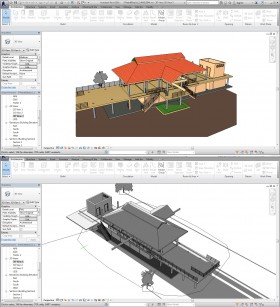
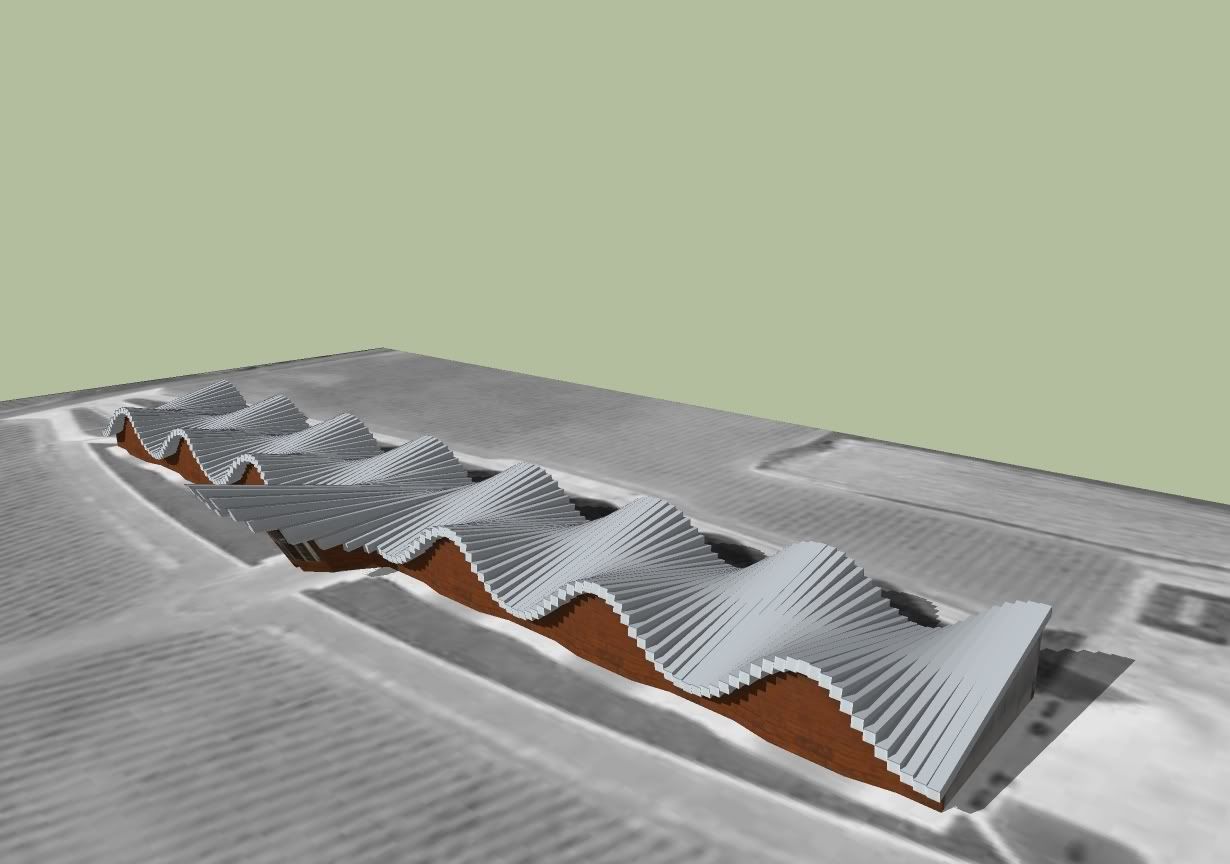
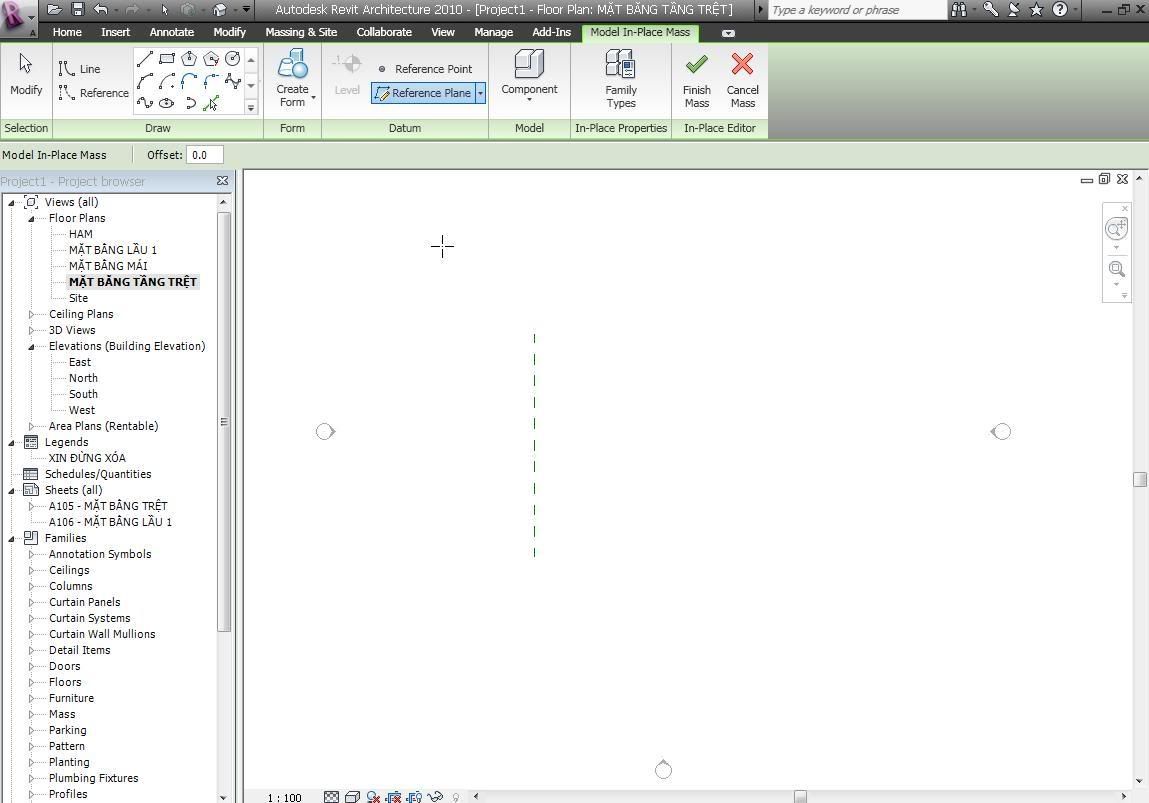
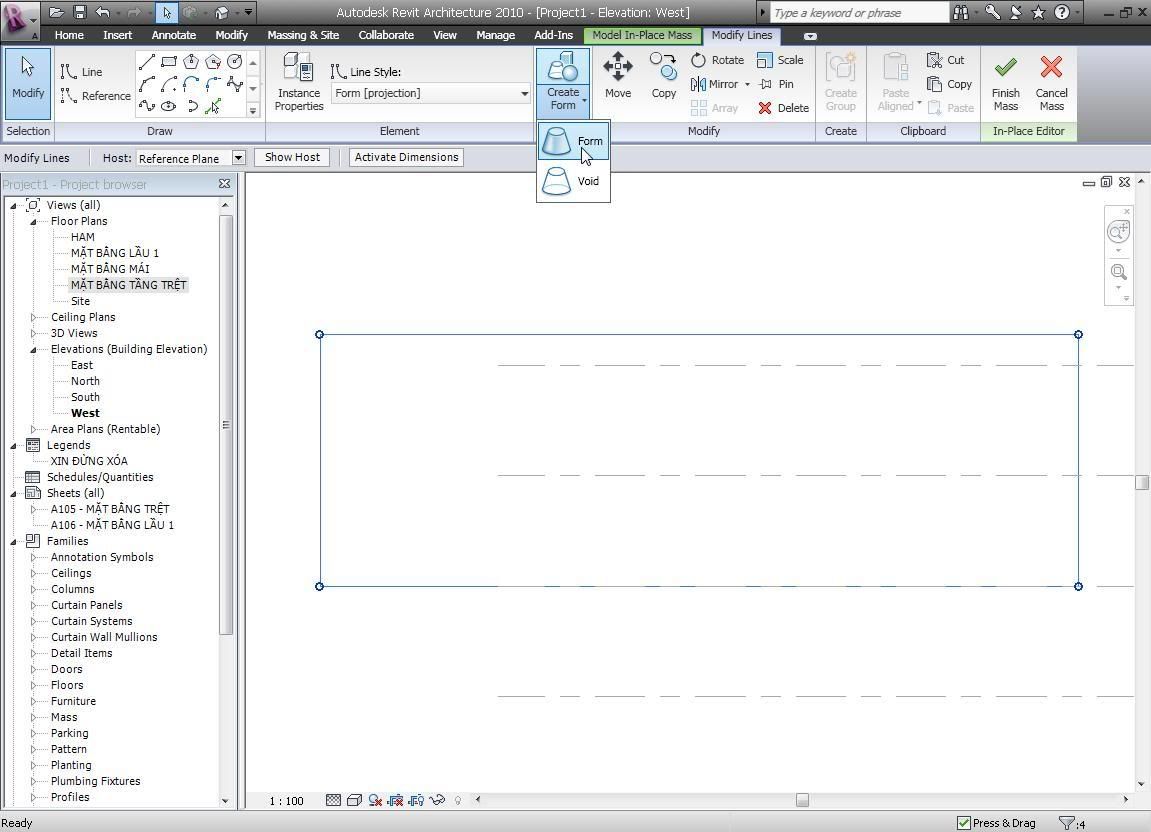
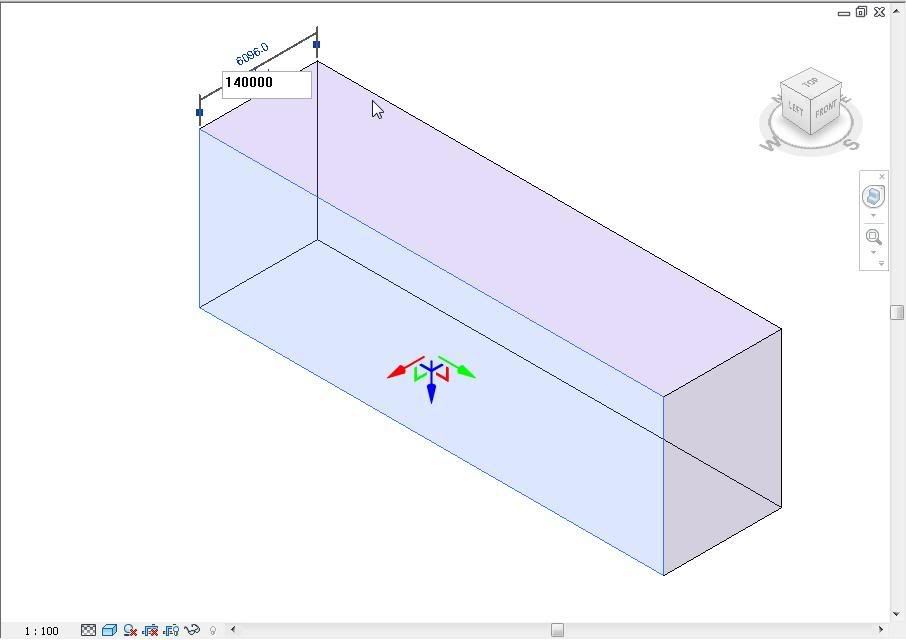
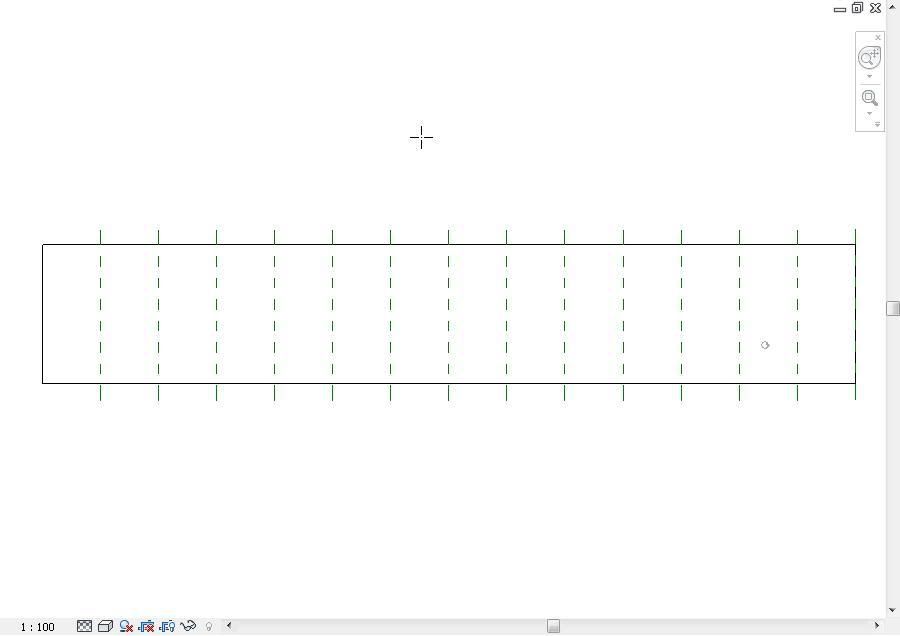
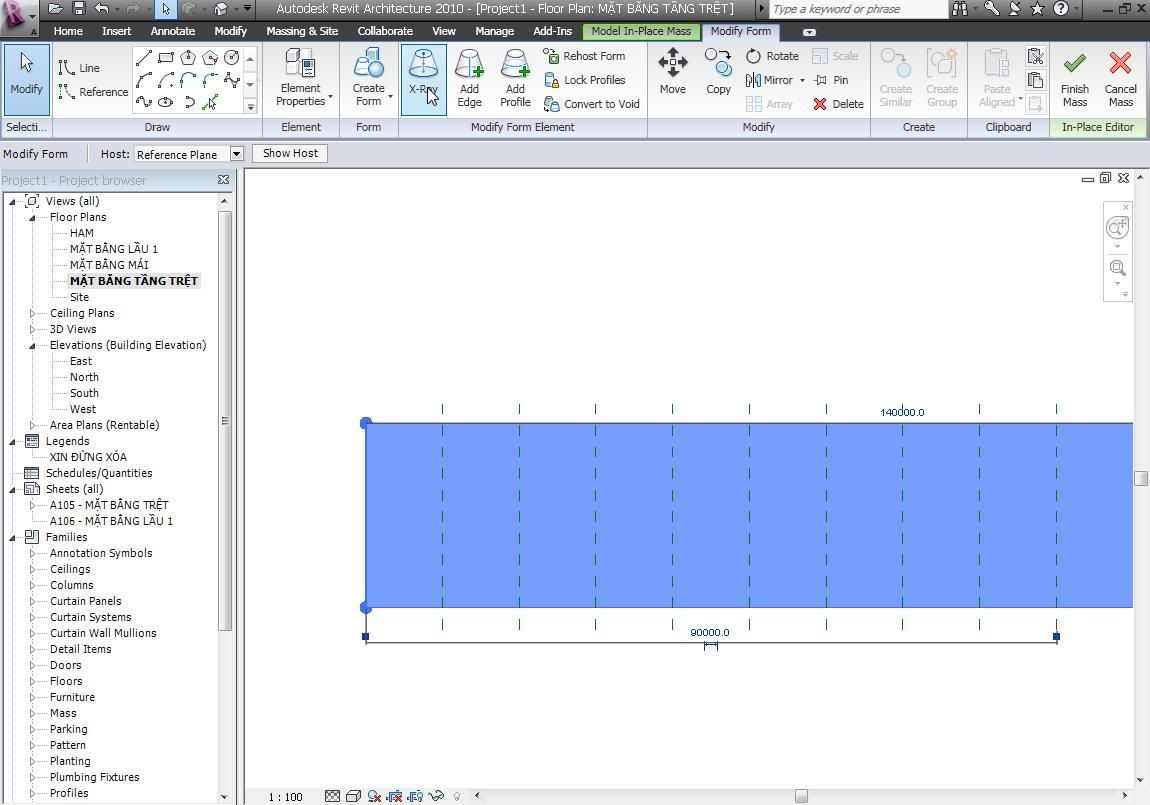
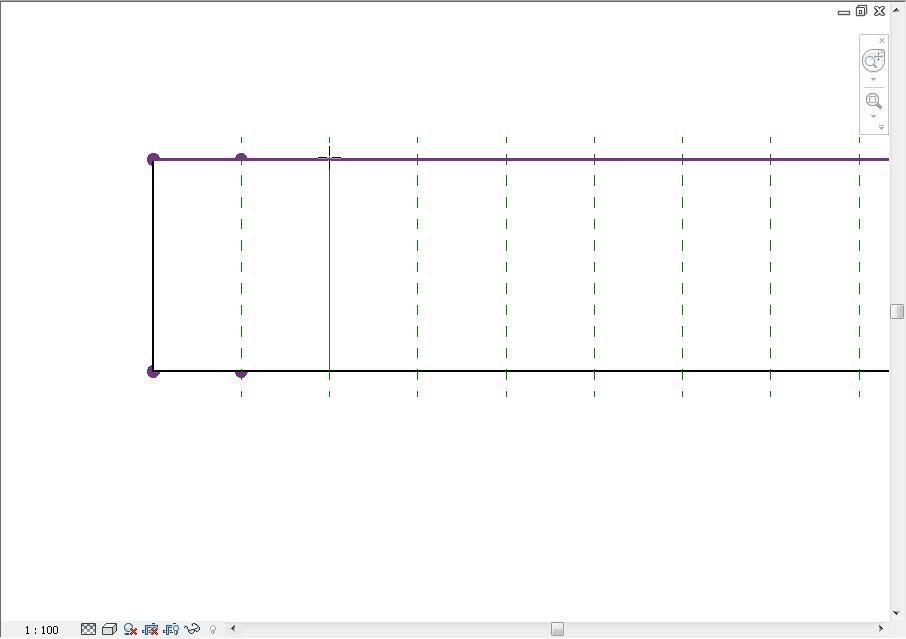
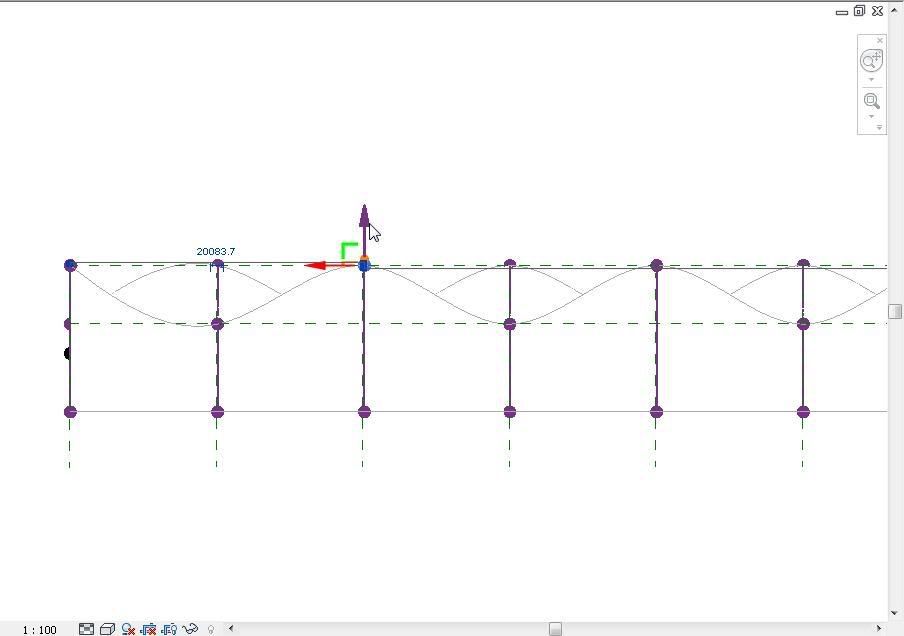
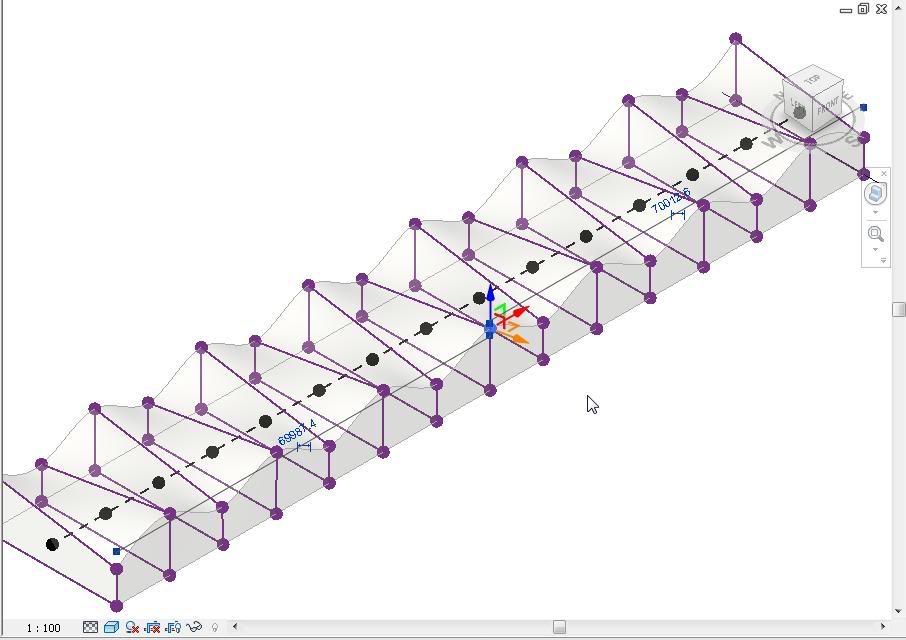
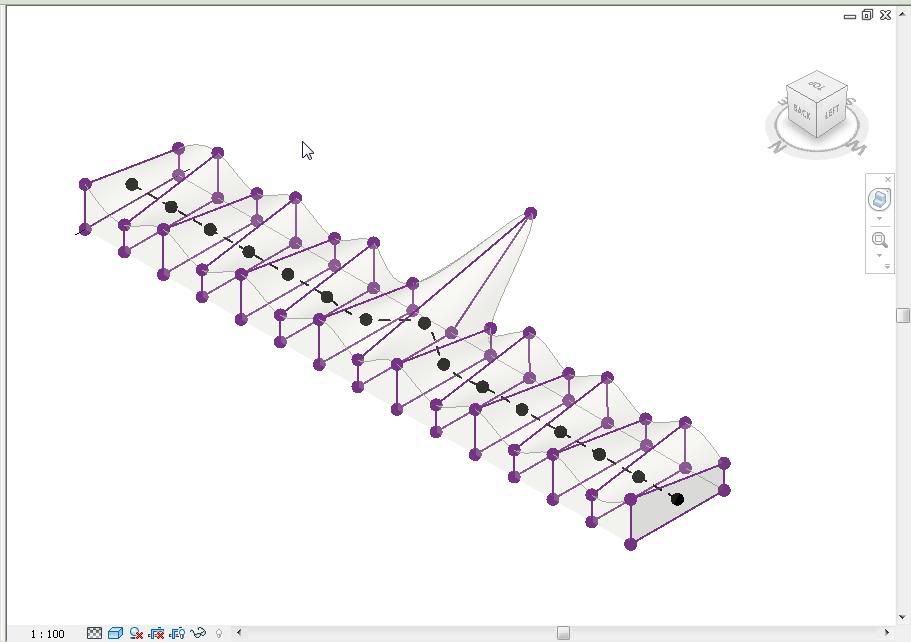
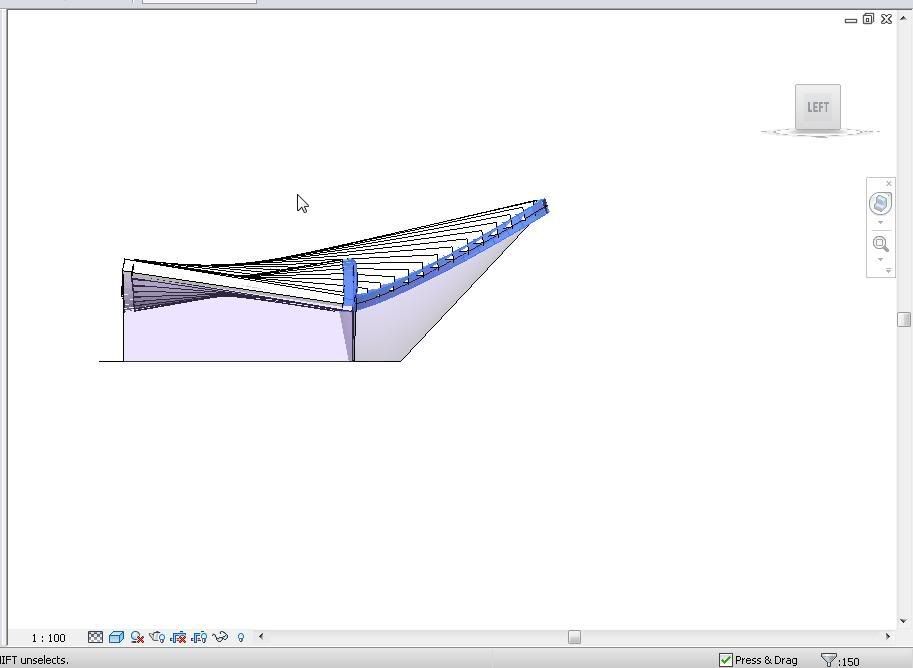
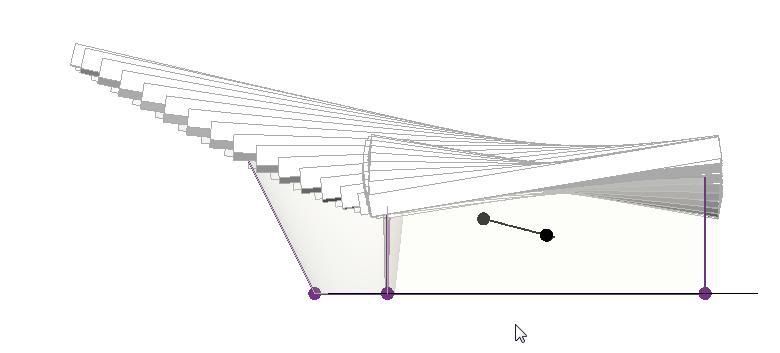
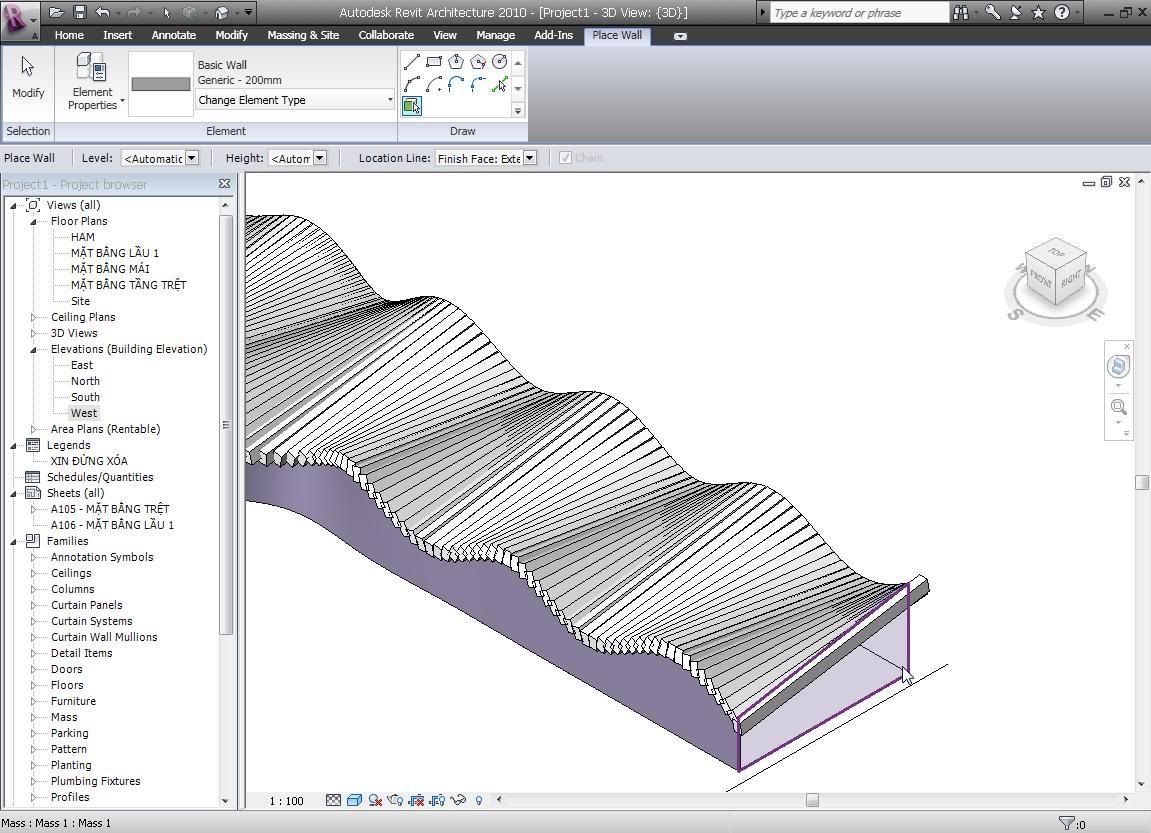
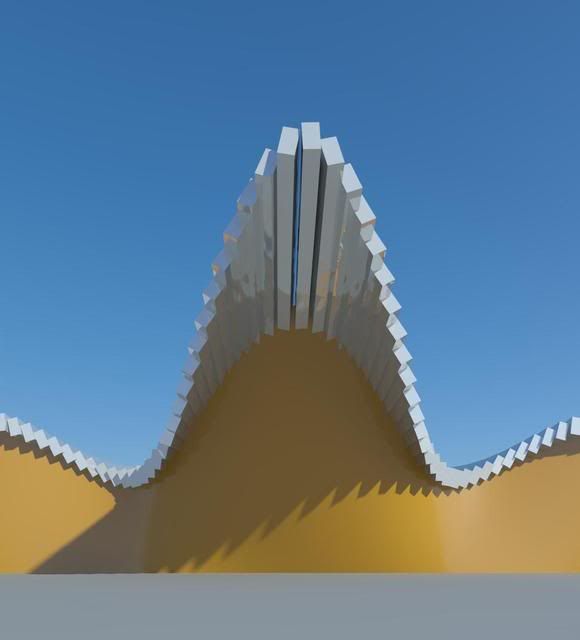
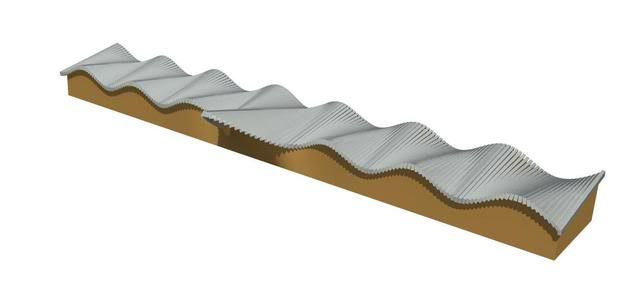
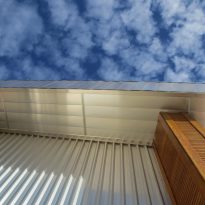
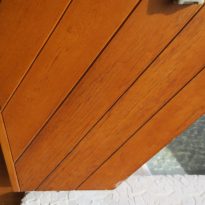
Về tab Home, chọn Set work plane Pick a plane ->Chọn mặt phẳng vừa tạo -> west Về lại Model in-place mass, vẽ HCN kích thước 24000x8000 Chọn HCN vừa tạo ->create form Sau khi create form thì nó sẽ tự động extrude cho chúng ta,về 3D,chọn 1 mặt chỉnh kích thước đã extrude là 140000. Về lại mặt bằng, tạo thêm các ref plane như hình cách nhau 10000
Chọn mass -> Xray
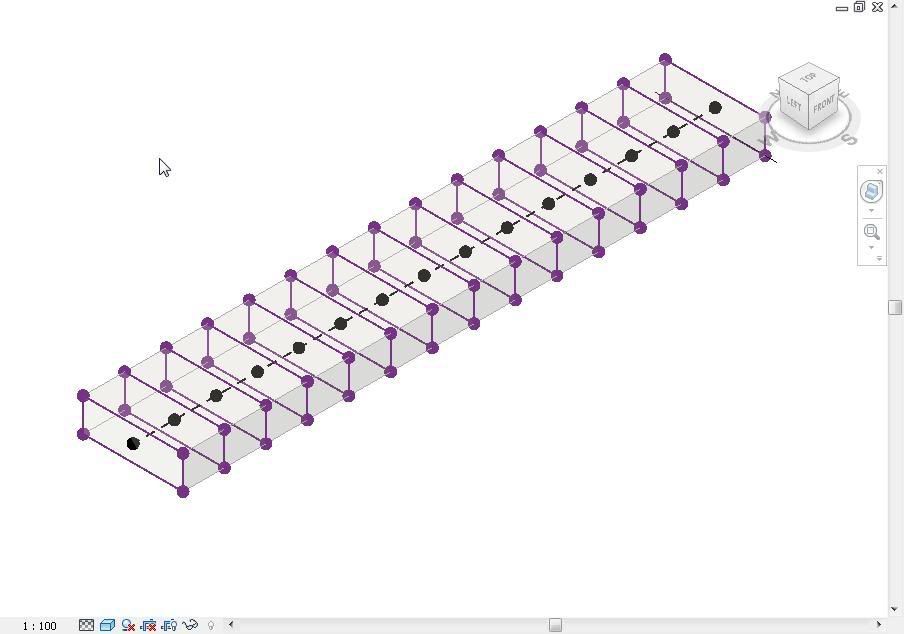
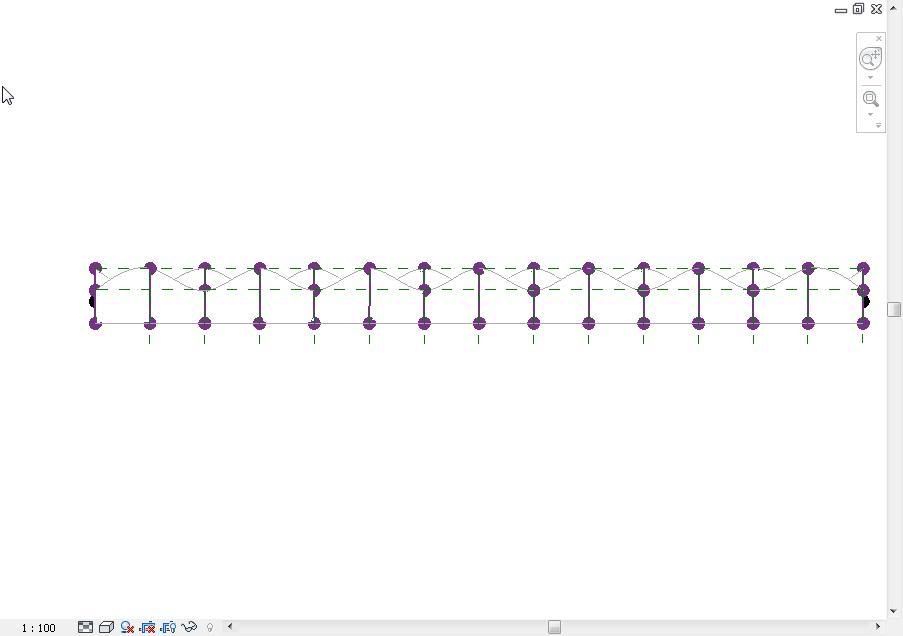
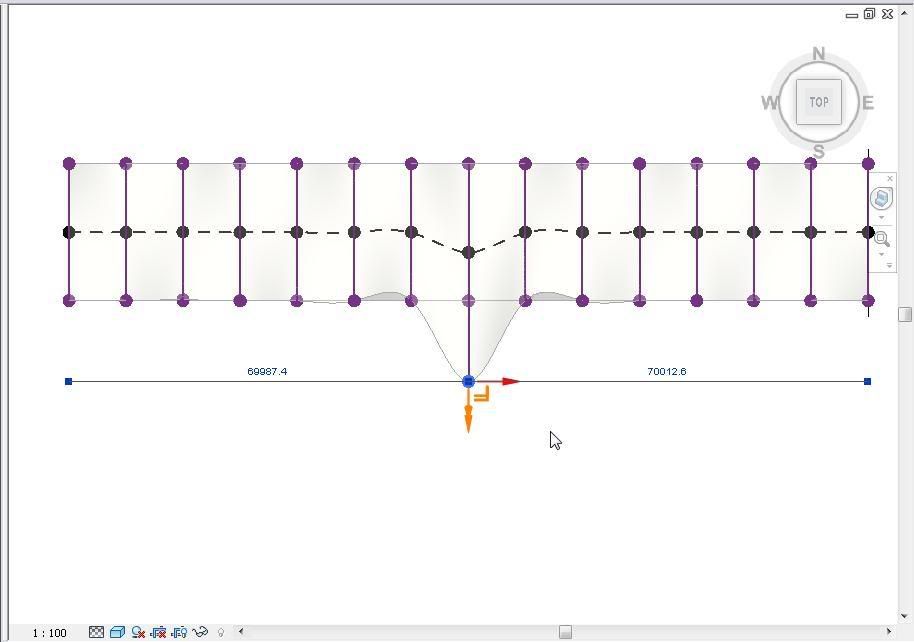
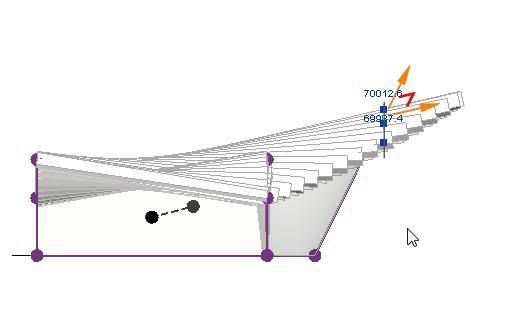
Chọn tiếp mass -> Add profile theo các đường ref plane đã vẽ Sau khi add xong các profile về 3d, các bạn sẽ có hình như thế này Mục đích khi chọn Xray là chúng ta có thể thấy được các điểm, đường, mặt phẳng từ đó có thể điều khiển nó 1 cách dễ dàng. Về mặt đứng South, vẽ thêm hai ref plane cách nhau 4000 rồi chọn các điểm ở mặt phẳng phía trên và move đến các vị trí như hình Lưu ý : nhấn phím TAB khi đưa con trỏ chuột lại gần các điểm cần di chuyển để chọn cho chính xác Tiếp tục về mặt đứng North và làm tương tự sao cho các điểm nằm xen kẽ nhau tên hai ref đã tạo. Qua 3d bạn đã có được hình dáng mái gần như ý rồi.
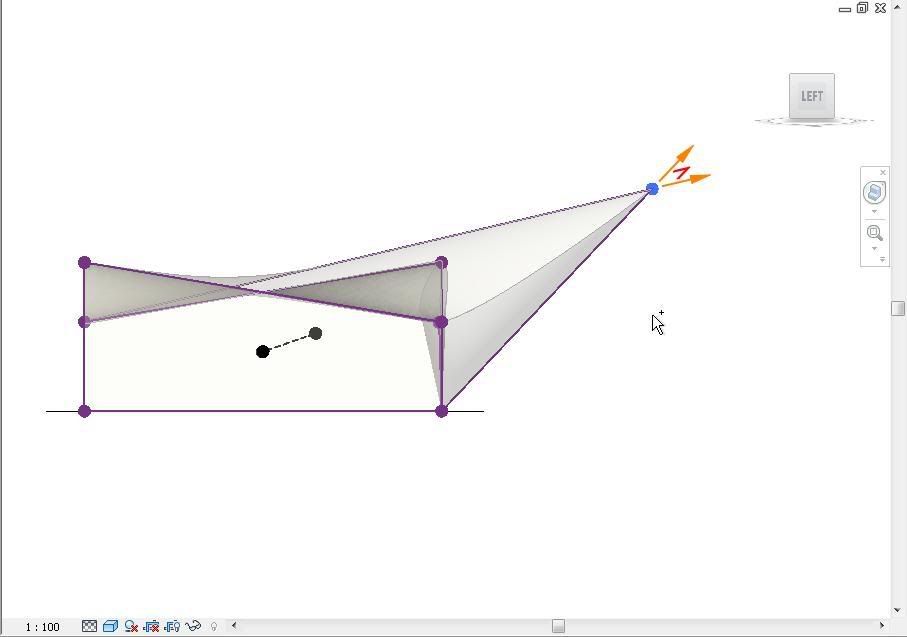
Để làm cái mái ở giữa vươn ra , chúng ta chỉ cần chọn và move điểm chính giữa để có được hình dạng như ý
Vậy là phần dựng hình cơ bản đã xong -> finish mass.
Sau đây chúng ta sẽ tạo các đường chạy uốn lượn trên mái.
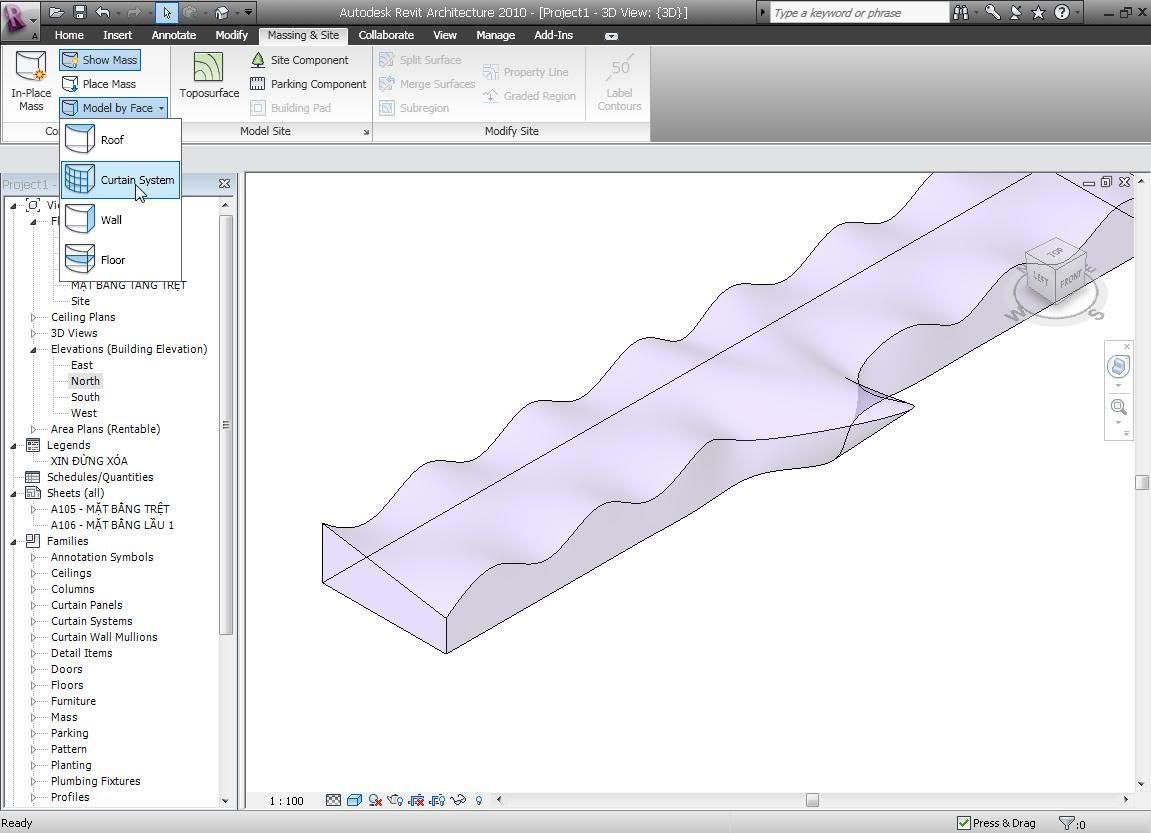
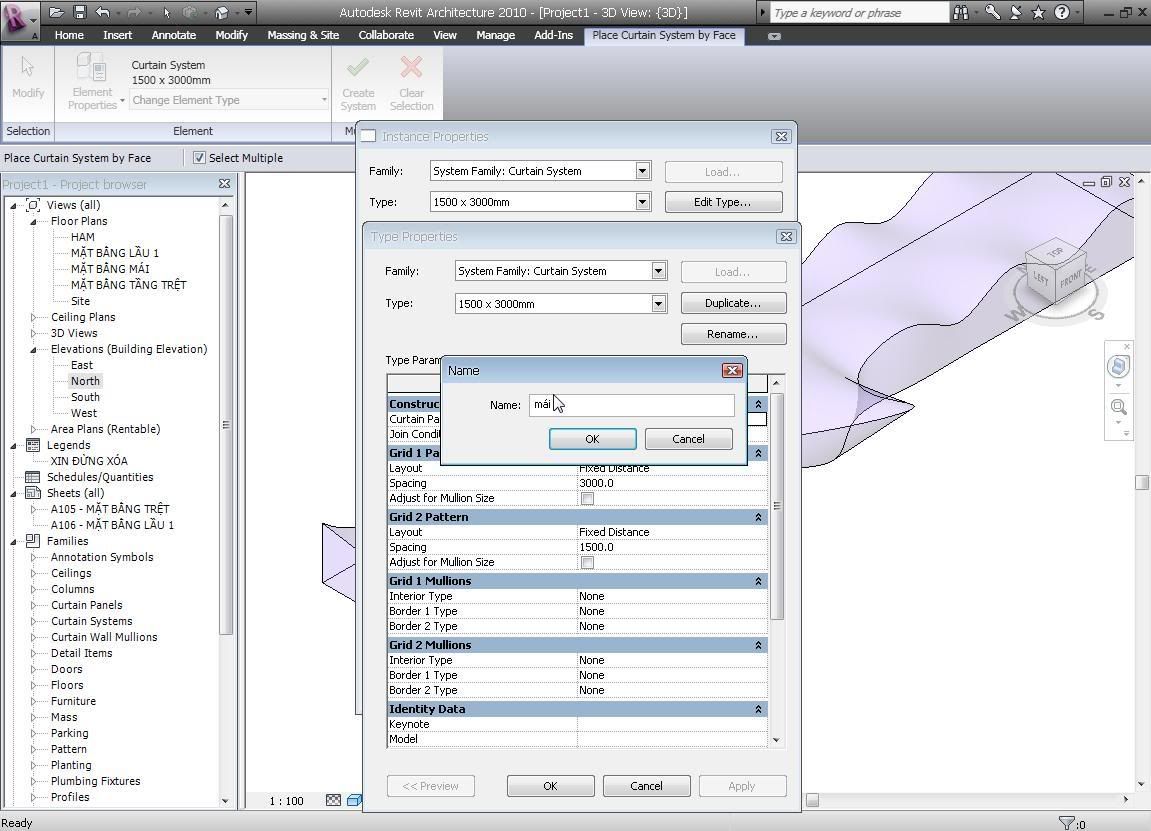
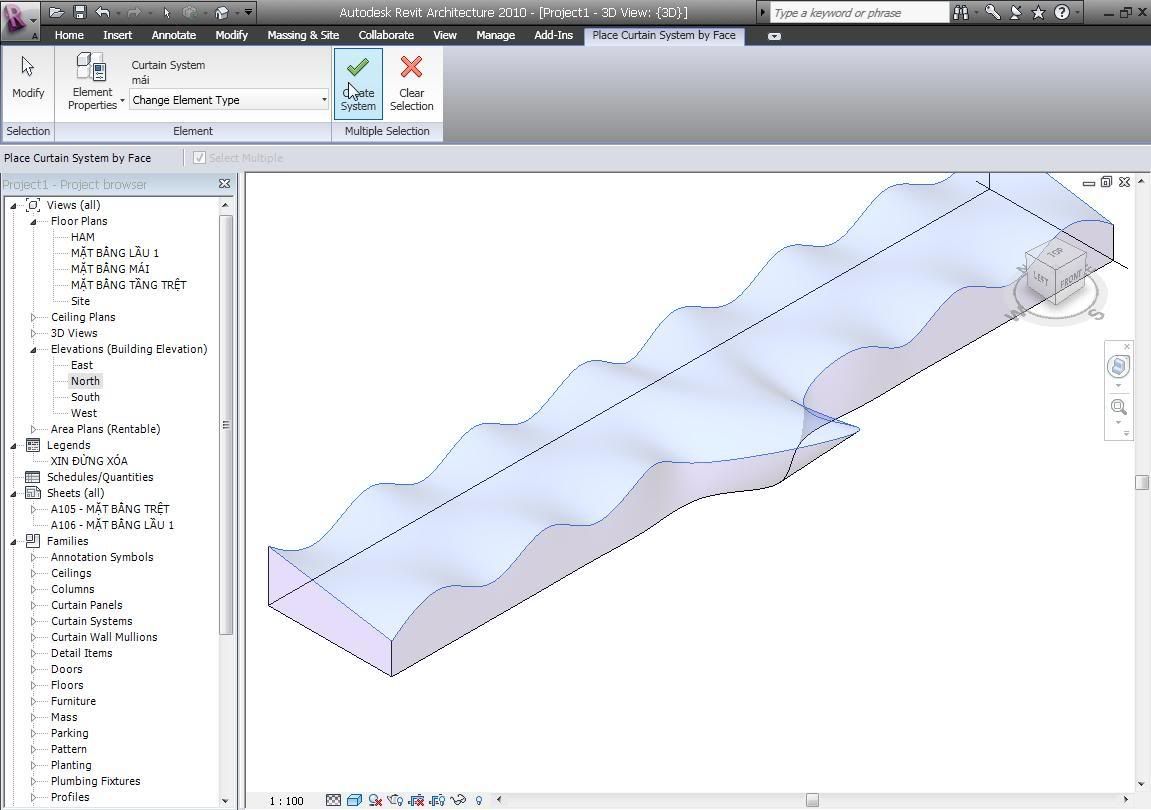
Về tab Massing and Site -> Model by Face -> Curtain System Element properties -> Edit Type -> Duplicate -> Đặt tên là “ Mái”
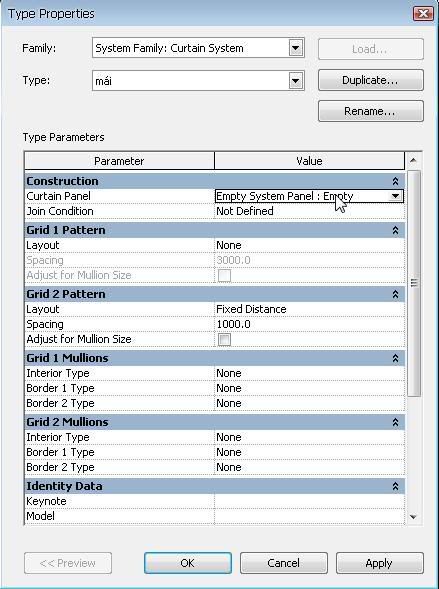
Trong bảng Type Properties, chọn Curtain Panel là Empty, Grid 1 patern -> Layout chọn None, Grid 2 patern -> Layout chọn fixed distance, Spacing :1000. ->OK Chọn mặt uốn lượn -> create system
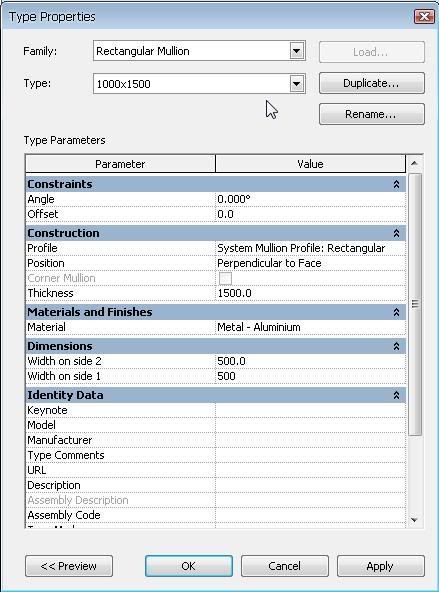
Bạn sẽ không thấy có gì thay đổi vì hồi nãy chúng ta đã chọn Curtain panel là Empty Về Tab home -> Mulion ->Element properties -> Edit Type -> Duplicate -> Đặt tên là “ 1000x1500”-> OK. Trong Type Properties, chọn Thickness là 1500 , wide on side 1,2 lần lượt là 500 -> OK->OK
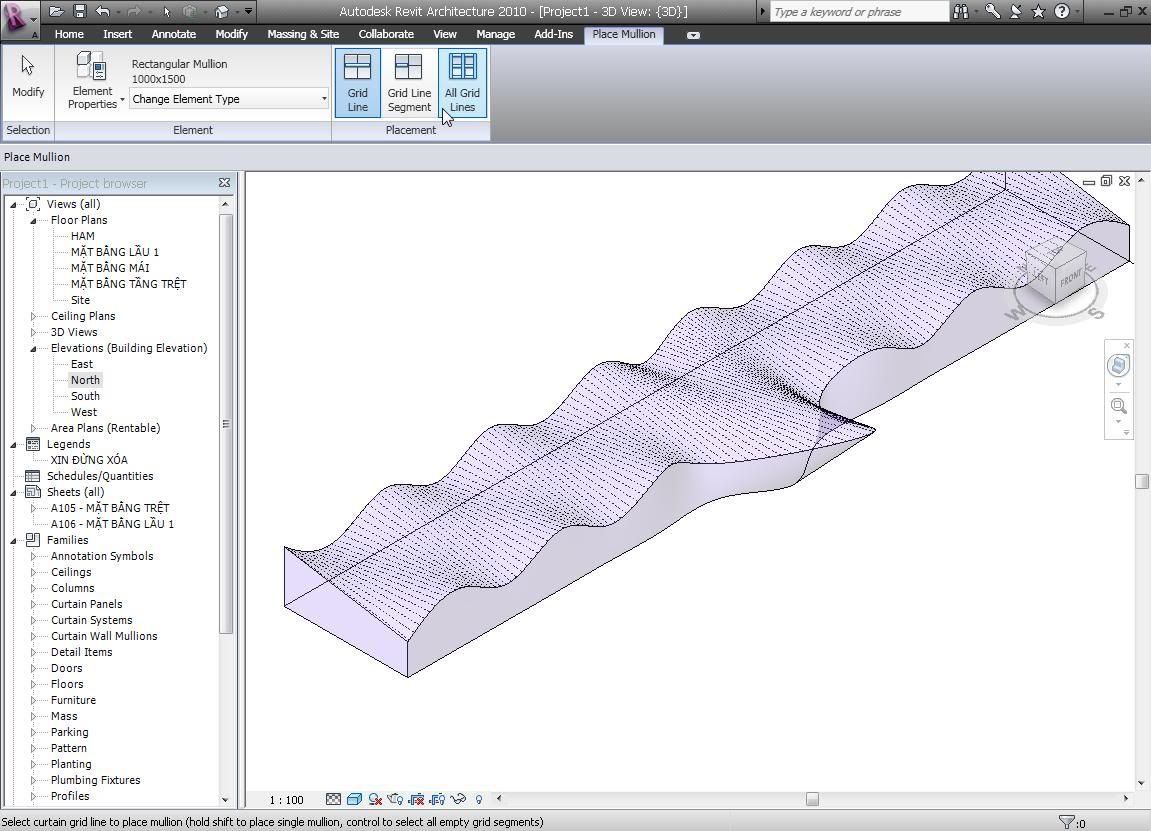
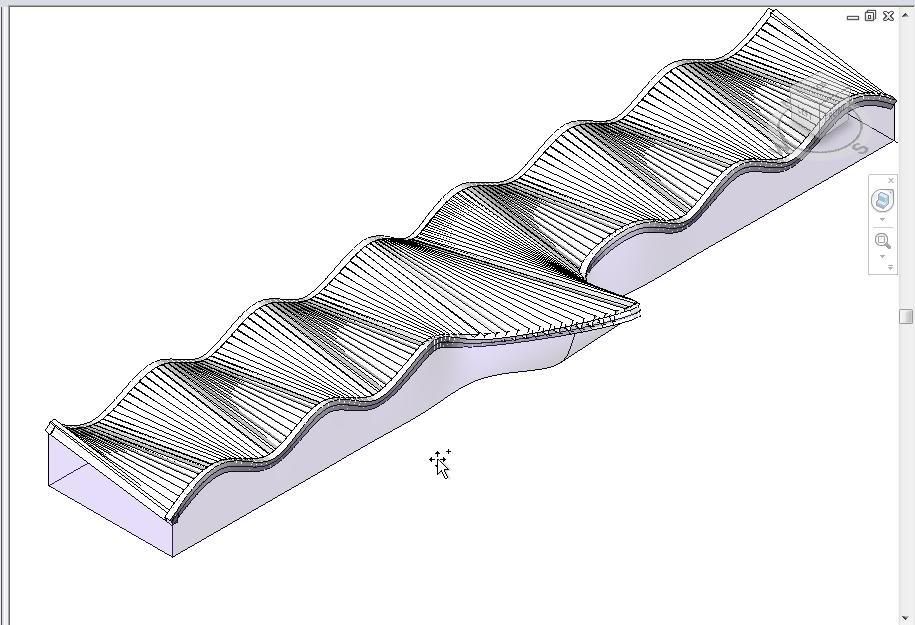
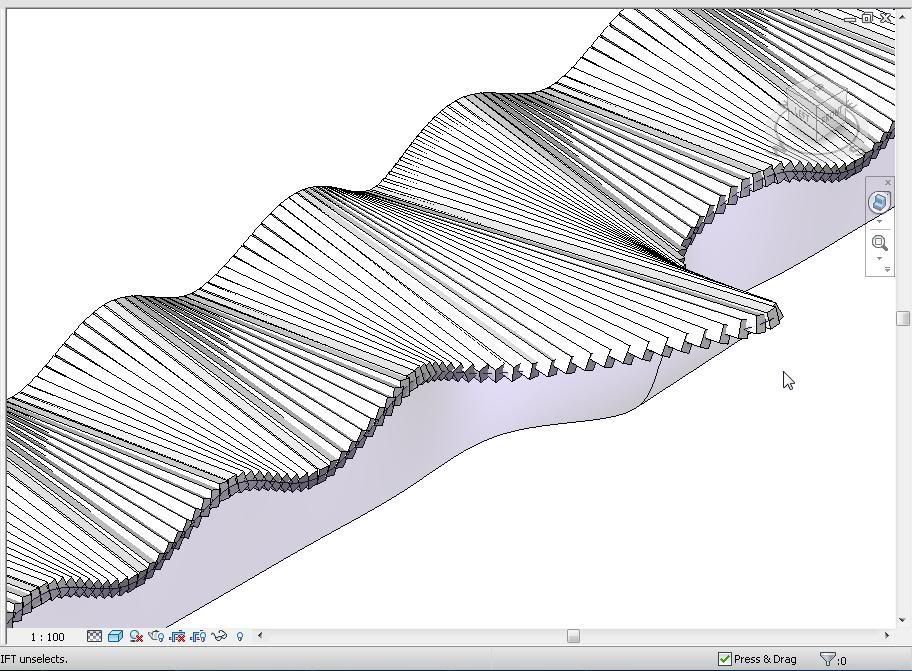
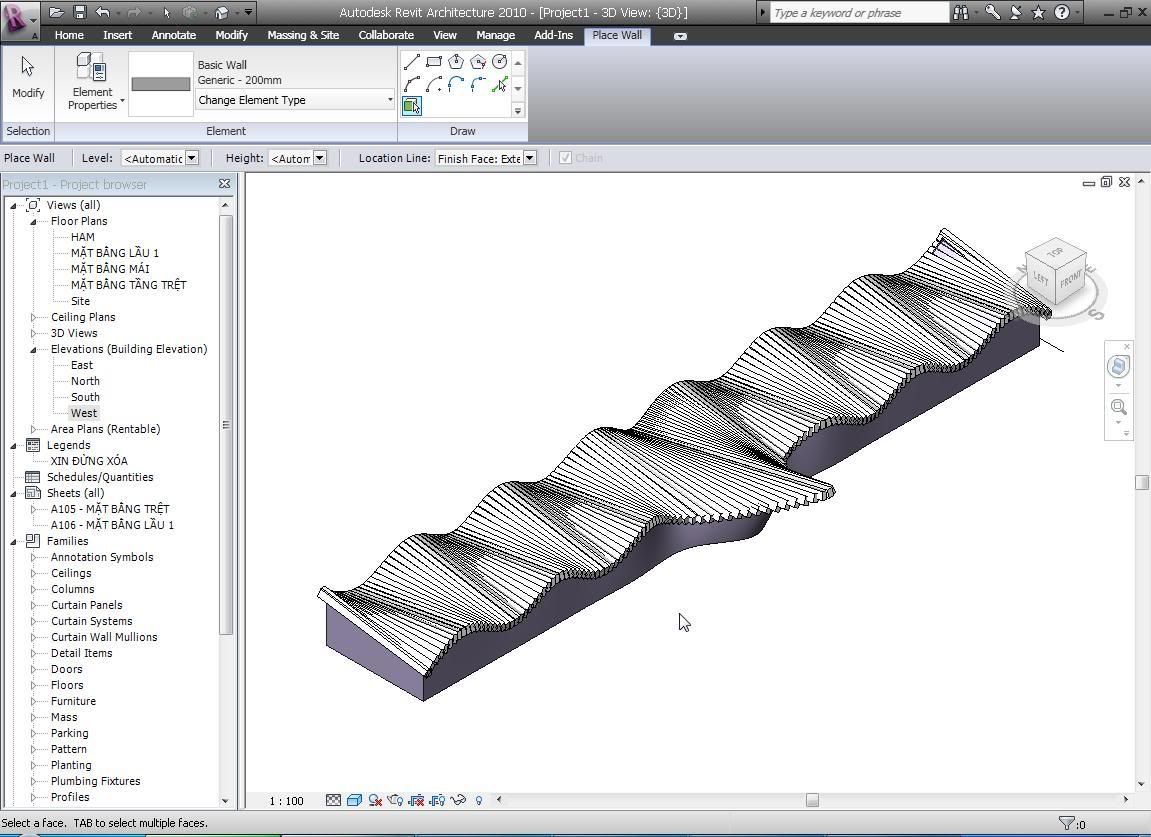
Chọn All grid line rồi click chuột vào mái ta sẽ có một mái uốn lượn như sau :
Click vào Left để về mặt bên , chúng ta có thể chọn dễ dàng các Mulion thừa và xóa nó đi.
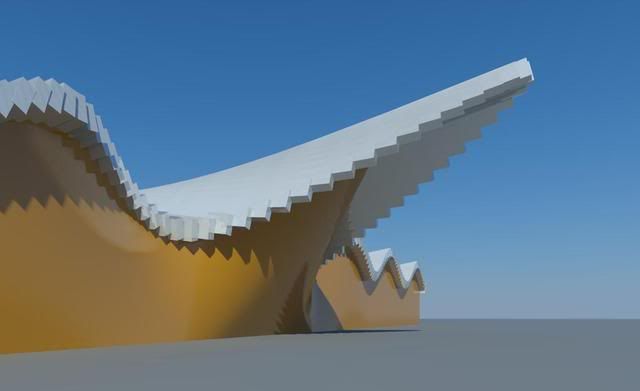
Bây giờ phần mái đã xong
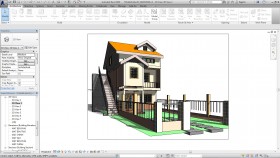
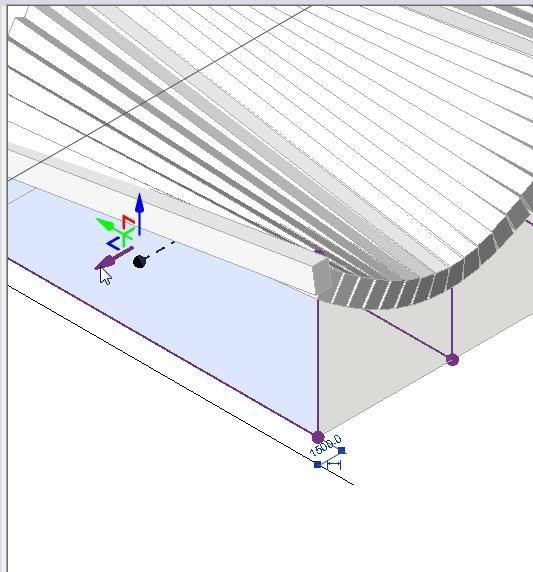
Để làm phần tường lọt vào trong mái, chọn MasS -> Edit In-place, move các mặt, các điểm cần thiết để có phần tường bao che bên ngoài như ý. Finish mass.
Về tab Massing and Site -> Model by Face -> Wall – Click vào các mặt phẳng cần tạo
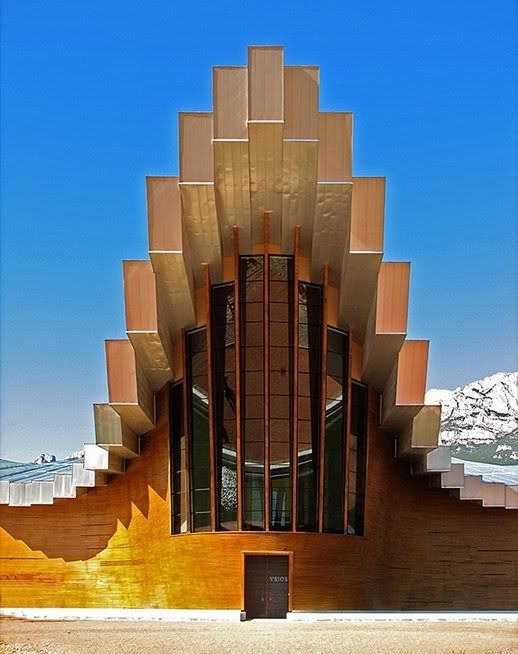
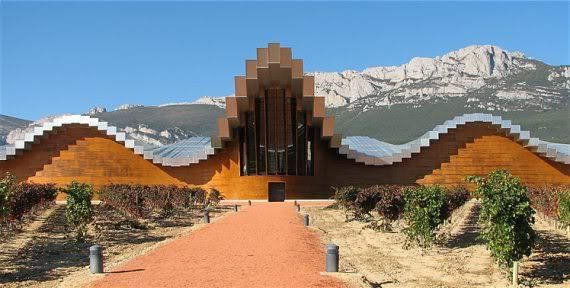
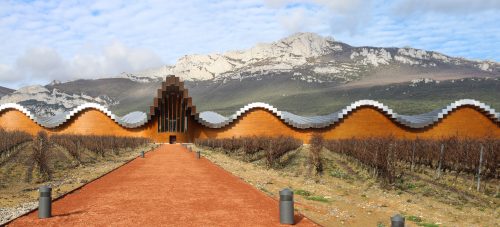
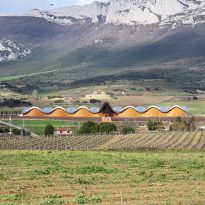
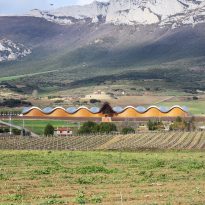
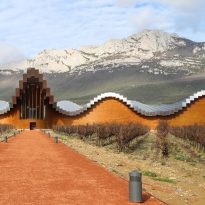
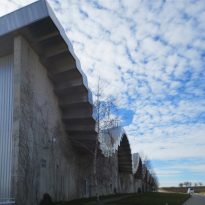
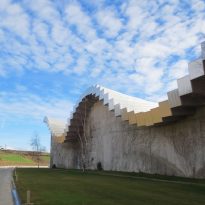
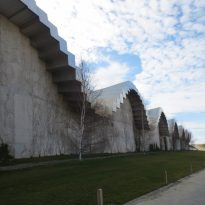
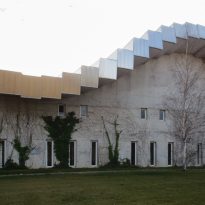
Bodegas Ysios Winery Architect: Santiago Calatrava Laguardia, Álava, Spain http://arch3611f10kccnyc.blogspot.com/2010/09/bodegas-ysios-winery.html
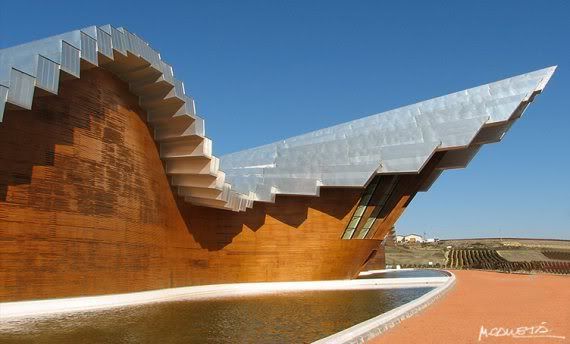
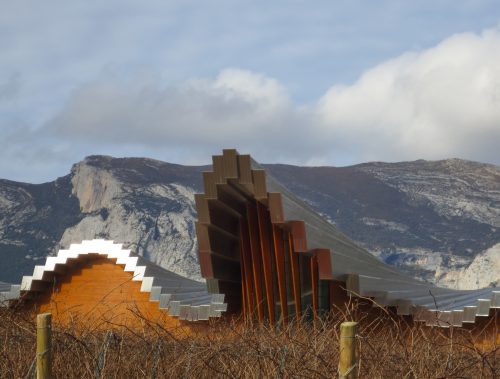
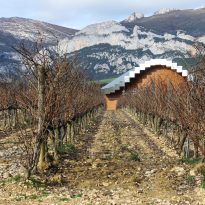
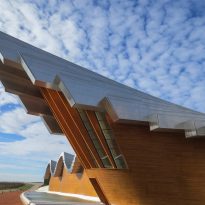
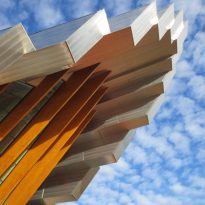
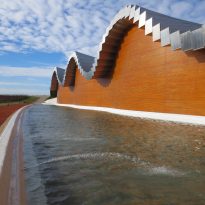
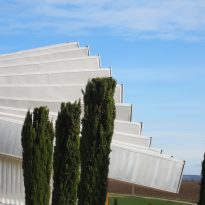
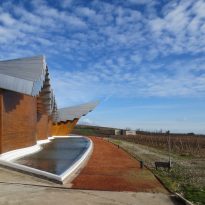
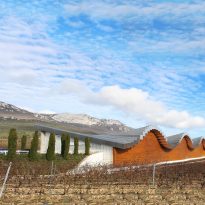
I love working with organic forms and curvilinear organization, so I chose this winery because of the beautiful undulations in the roof, as seen in the picture above. Below are a series of diagrams showing a number design aspects of this building. I will do this for each building chosen.
Camino de la Hoya, s / n, 01300 Laguardia, Alava, Spain
Some parts of this article have been translated using Google’s translation engine. We understand the quality of this translation is not excellent and we are working to replace these with high quality human translations.
Introduction
In 2001 Bodegas Ysios, designed by the architect were inaugurated Santiago Calatrava and belonging to the group Domecq Bodegas. Its construction began a series of avant-garde constructions wineries in the Rioja, also known as “bodegas author” which combine production, tasting and sale of wine they produce, generally located in the same vineyards.
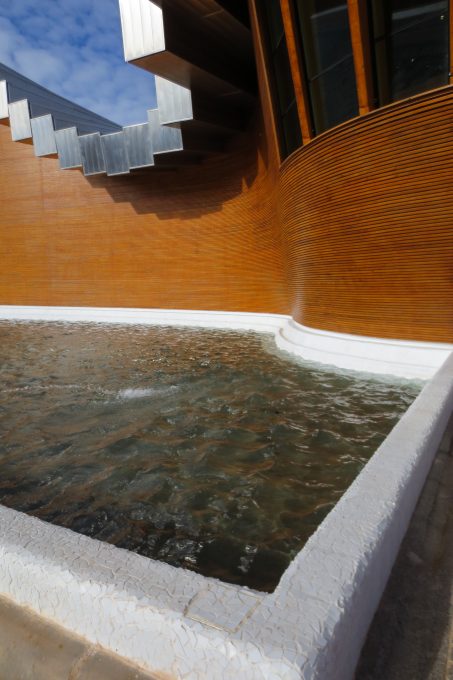
In the case of Bodegas Ysios, whose name is a tribute to the Egyptian gods, intimately related to the world of wine, Isis and Osiris its construction was at a vineyard of over 120 hectares in La Rioja Alavesa. From Egypt also gets inspiration from the “channels” that surround the winery, collecting the essence of the Nile River.
Situation
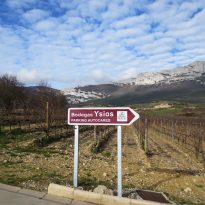
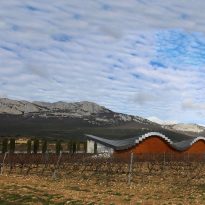
Bodegas Ysios, surrounded by the Sierra de Cantabria that creates a protected microclimate, are located on land conducive to growing grapes, La Rioja Alavesa, Camino de la Hoya, s / n, 01300 Laguardia, in the southern province Alava, La Rioja, Spain.
The Sierra de Cantabria protects the vineyards riojano the influence of the Bay of Biscay. The role of this range, with peaks over easily altitudes of over 1,300 meters, it is crucial, acting as a barrier bioclimatic. In addition, their height protects the region from the cold and wet northwest winds, while the orientation of the vineyard, at the foot of the mountain whose gentle slopes are interwoven with the terraces of the Ebro river, maximizing the benefit of sunlight sobe strains. Approximately half of the land belonging to the Bodega Ysios is dedicated to the cultivation of vineyards. A 64 km from Vitoria belongs to the autonomous community of the Basque Country.
Concept
The group Ysios Bodegas y Bebidas wanted an iconic building that would attract attention to the Alavesa wine land and accommodate the precise and rigorous spaces needed to make, store and sell wine program.
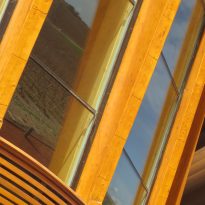
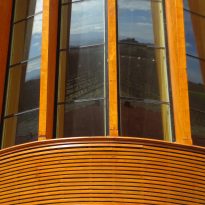
The building is conceived as a fully integrated into the surrounding landscape element and at the same time, as a specific autonomous sculpture site due to the volumetric treatment of its walls and deck creates a continuity between outer space and the interior through the ” static “enclosure movement. The cover of the cellar is the fundamental element in the design of the project. The material used in its exterior finish is natural aluminum, which contrasts with the warmth of wood and optimize the dynamic possibilities of the building.
Spaces
The vineyards where the winery was built Ysios occupy 72,000m2 of which 15,384 m2 urbanized, 8,000m2 occupies the floor. The construction is uneven, with steep elevation changes of up to 10m at the top, on the north side, to the lowest levels in the south. The original architectural result is obtained by overlapping sheet members at different levels.
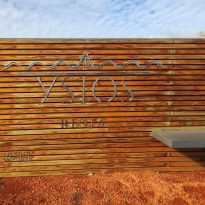
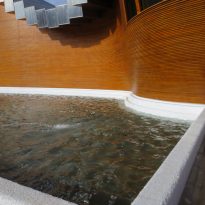
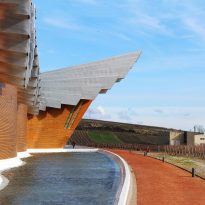
Crossing pools in front by a bridge leads to the modest main entrance placed in the center of the facade, a wooden door with two leaves in which the name of the winery. On this entry the roof forward in a continuous volume which is conceived as a balcony overlooking the vineyards.
Plant
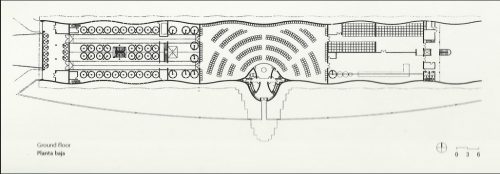
PLANT
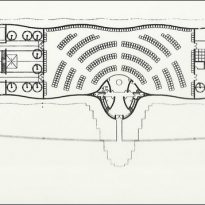
The building is an elongated pavilion, 196x26m, with an area of 8,000m2, which linearly wine is made. On one of the side entrances enters grape and stored in barrels at the other end, where it is aged for later sale. On the way at different levels is the processing area, followed by the display area, the latter with two levels. On the ground floor the tasting room, shop and office address on the second floor a multifunctional hall is located.
The processing plant has fermentation tanks of 22,700 liter frustoconical, horizontal tanks for cold stabilization, typing and deposits barrels park with capacity for 4,000 units.
Structure
The building is emerging as a simple rectangular plan, along an east-west axis to accommodate the linear program winemaking process. The two load-bearing walls, with 196m long, which form the boundaries of the volume were made in concrete and placed at a distance of 26m. His stroke is winding in both plan and elevation, following the strategy of architect giving a volumetric treatment both as to cover the walls.
HOUSING SCHEME
Cover
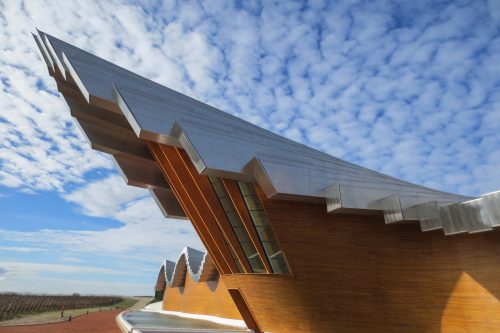
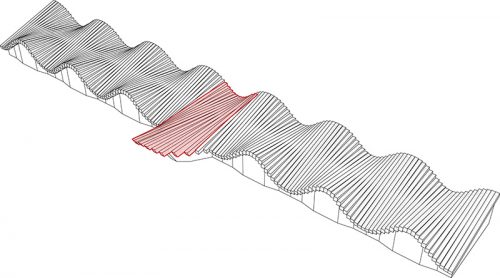
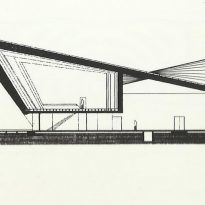
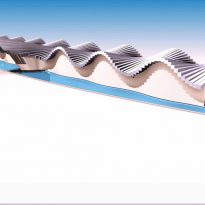
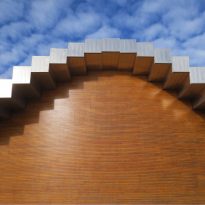
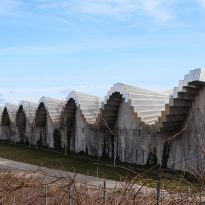
The cover is made of laminated wood beams is treated as a continuation of the facades. The result is a wavy ruled surface, which combines concave and convex surfaces as it evolves along the longitudinal axis. The wooden beams that support the roof are supported by the lateral load-bearing walls. At both ends of the building, on the side walls, two entrances goods are located, accentuating the linearity of the building.
Materials
South facade
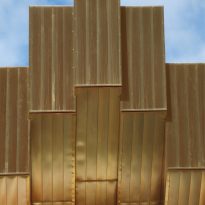
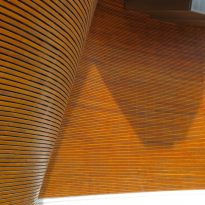
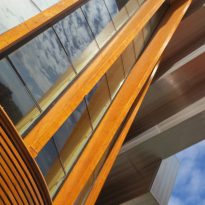
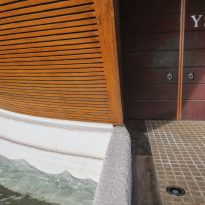
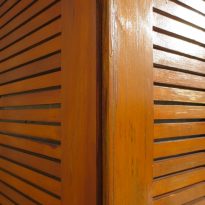
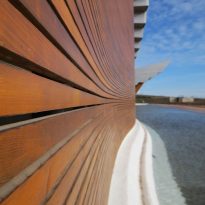
The walls of the main facade, the south, which are made of concrete like the rest of the walls were lined with wooden slats of cedar, placed horizontally, except for the steep sloped beams that highlight the high glass placed over the main entrance which they were placed upright. The horizontal slats were specially adapted to the undulations of the walls.
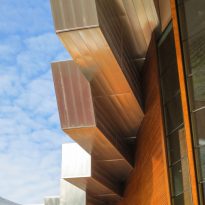
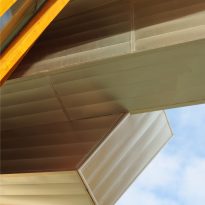
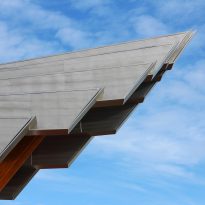
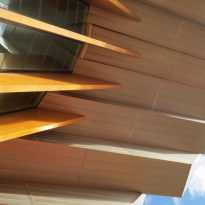
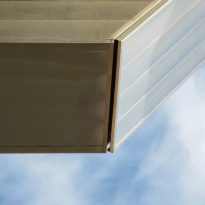
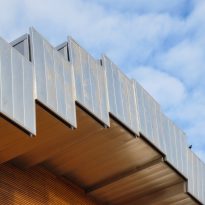
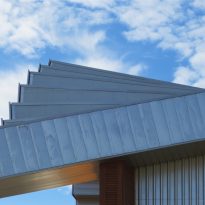
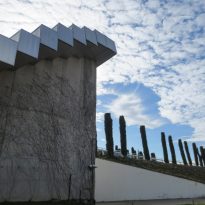
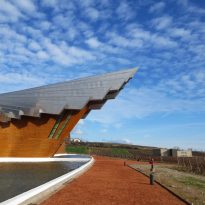
The roof has been covered with aluminum panels, creating a sharp contrast with the wood of the facade. The effect of sunlight created on the cover accentuates its sinuosity and creates a kinetic effect in contrast to the calm of the vineyards and the surrounding mountains.
North side
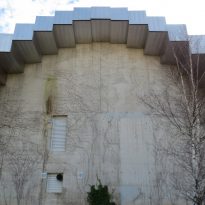
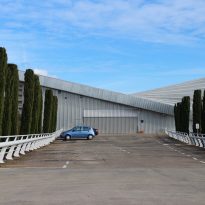
In corresponding to the rear north facade, precast concrete panels are in sight, with very few and narrow openings. The shape of the cover is similar to that of the south facade.
East and west facades
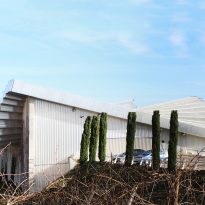
The lateral facades, east and west, are lined with corrugated aluminum plates.
------------
La Rioja Bodegas Ysios
Striped surface
published by Valeria on Fri, 19/11/2010 - 23:19
(link is external)
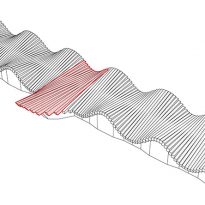
In this exercise I started from the project by Santiago Calatrava La Rioja, Bodegas Ysios ( Laguardia, Álava, Spain), in order to be able to parameterize a ruled surface.
1_The first step was to create a family that contained a "trilithon", consisting of two pillars with a square base and a square beam.
2_I fixed a height to the pillars. Using the height variation parameter , I add and subtract respectively from each pillar the value assigned to the parameter. This is an instance parameter , which will allow me to modify various elements of the project individually.
3_At this point I have joined the tops of the two pillars through an inclined reference plane , to which the beam will be connected.
4_The angle of inclination of the reference plane is defined by the trigonometric formula α=arctan(a/b) ,
obtained from the known formula tanα=a/b, where a is the variation in height and b half the span.
I create the parameter, selecting Angle in the parameter type window .
I insert the formula in the parameter.
5_Block the height of the beam in the extrusion (otherwise it doesn't stay fixed when I change the angle).
6_I insert the family in a new project .
7_Not having the script that allows me to modify the height variation parameter following a function (i.e. associating ordinate values of a curve), I carry out the process manually , assigning a different value to each copy of the family to the parameter.
8_Possible variations:
sinusoidal trend (different values assigned to the instance parameter)
increase of the light between the pillars (different values assigned to the type parameter)
decrease structure size (different values assigned to the type parameter)
and more...
Valeria Vital
Parametric techniques
Striped surface
Calatrava
Rotation
La Rioja Bodegas Ysios
Attachment Dimension
Binary data FamCalaValeria.rfa 220KB
Binary data ProjCalaValeria.rvt 3.36MB
Binary data FamCalaValeria_2010_02_10.rfa 220KB
Read everythingon a striped surface Valeria's blog
----------